
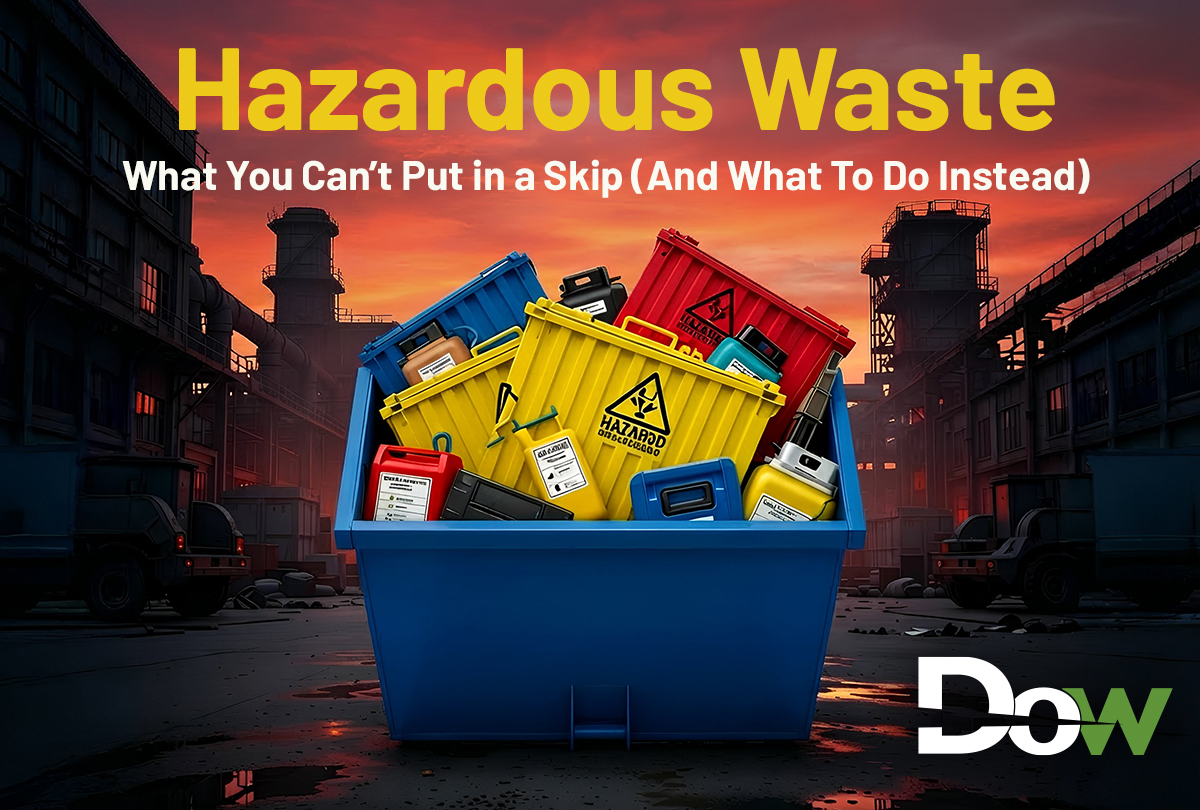
Hiring a skip is one of the easiest ways to manage waste — but not everything can go into a skip.
Some materials are classed as hazardous waste, and it’s a legal requirement to handle and dispose of them correctly.
Understanding what can’t go in a skip helps protect people, the environment, and ensures your waste is managed safely and responsibly.
What Is Hazardous Waste?
Hazardous waste includes materials that are harmful to human health or the environment if they’re not handled properly. These items often require specialist treatment, containment, or disposal routes.
What You Can’t Put in a Skip
The following items must not be placed in a general skip:
- Asbestos
- Paints, solvents, and chemicals
- Batteries
- Gas cylinders
- Oils and fuels
- Electrical items (WEEE)
- Fluorescent tubes
- Tyres
These materials can pose serious risks during transport and processing and can contaminate other waste streams.
Why Hazardous Waste Needs Special Handling
Improper disposal of hazardous waste can:
- Endanger workers and the public.
- Damage waste and recycling facilities
- Cause environmental pollution
- Lead to fines or legal action.
That’s why strict regulations are in place — to protect everyone involved.
What Should You Do Instead?
If you’re dealing with hazardous materials, the safest approach is to ask before disposing of them. Specialist services and approved facilities are available to ensure hazardous waste is managed in line with regulations.
At DOW Group UK, we help customers understand the correct disposal routes and arrange compliant solutions where required. If you’re unsure about an item, our team is always happy to advise.
Responsible Waste Disposal Starts With the Right Advice
Whether you’re clearing a home, managing a building site, or handling commercial waste, knowing what can’t go in a skip is just as important as knowing what can.
Responsible waste management protects people, communities, and the environment — and starts with making informed choices.
Dow it Right. Contact Dow today.


